
There are Caribbean islands people visit for the beaches.
Others are chosen for food, nightlife, sailing or the feeling of disappearing somewhere quiet for a week.
Saint Martin is unusual because it doesn’t really force travelers to choose.
Within a relatively small island, a morning can begin on a quiet French-Caribbean beach, lunch can take place in a former fishing village known for its restaurants, the afternoon can be spent snorkeling or sailing, and the evening can finish among the bars and nightlife of the Dutch side.
The distances are short.
The changes in atmosphere are not.
That contrast is what makes Saint Martin far more interesting than the usual image of a Caribbean island built around a resort, a beach and little else.
An Island Shared by Two Countries
Saint Martin’s geography immediately sets it apart.
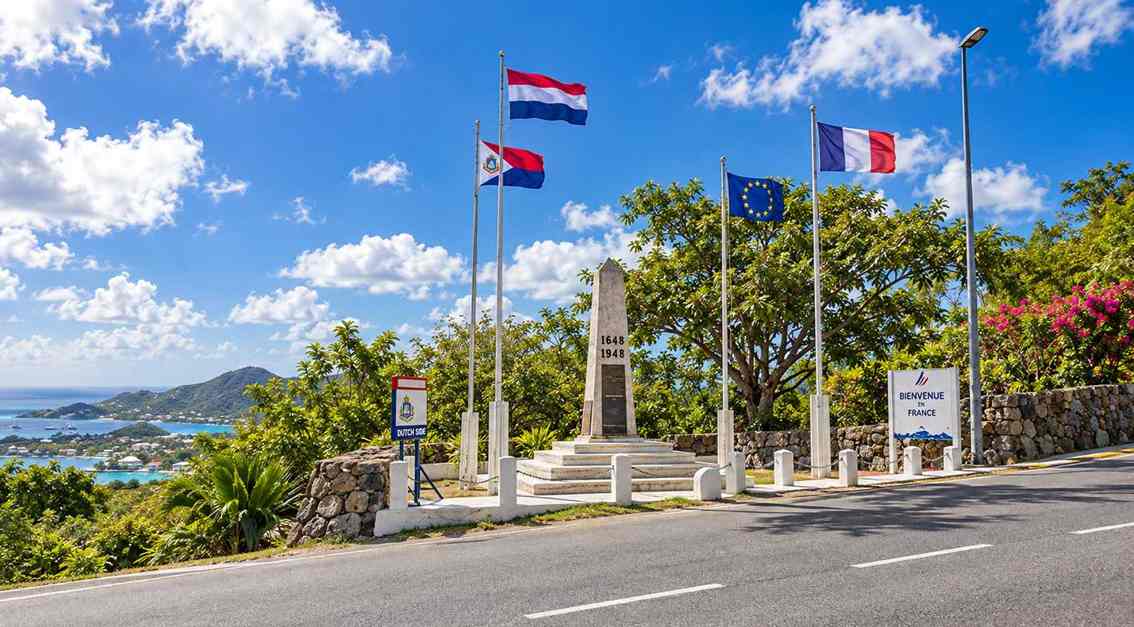
The northern part of the island is French Saint-Martin, while the southern part is Dutch Sint Maarten. The two sides have shared the island for centuries, yet there is no conventional border experience for travelers moving between them.
You can simply drive from one side to the other.
At first, that sounds like an interesting geographical curiosity.
Once you’re actually traveling around the island, it becomes a major part of the experience.
The French side often feels more understated. Small villages, beach restaurants, bakeries, quiet coves and long lunches fit naturally into the rhythm of the day. The Dutch side has a different energy, particularly around Simpson Bay, Maho and Philipsburg, where nightlife, casinos, shopping and larger resorts become more visible.
Neither side tells the whole story.
The pleasure comes from moving between them.
The Best Way to Discover Saint Martin Is Not to Rush It
Because the island is relatively compact, visitors sometimes arrive with an ambitious plan.
They want to see everything.
Every beach. Every viewpoint. Every village. Every restaurant somebody recommended online.
Saint Martin quickly teaches a different lesson.
You don’t need to collect places.
You need enough time to enjoy them.
A beach that was supposed to be a one-hour stop can easily become an entire afternoon. Lunch on the water may take longer than expected. A road you hadn’t planned to follow might lead to a viewpoint or cove worth exploring.
The island works best when the itinerary has some space in it.
Choose an area rather than a checklist.
Then see what happens.
Orient Bay Shows the Livelier Side of Beach Life
Orient Bay is one of the places that often appears first when travelers begin researching Saint Martin.
There is a good reason for that.
The long beach combines turquoise water with restaurants, beach clubs and watersports, creating a setting where spending an entire day requires very little effort.
It isn’t the deserted tropical beach fantasy.
And it isn’t trying to be.
People come here because there is life around the sand. You can swim in the morning, have lunch without leaving the beach, try a watersport in the afternoon and stay nearby for dinner.
For travelers who enjoy having activity around them without giving up the Caribbean setting, it is an easy place to understand.
Yet a few kilometers away, the atmosphere can change completely.
That is a recurring theme on Saint Martin.
Sometimes the Quieter Beaches Are the Ones You Remember
Happy Bay offers almost the opposite experience.
There are no rows of large resorts lining the beach. Reaching it involves walking from the Friar’s Bay area, which naturally limits the number of people who make the effort.
Once there, the rhythm slows down.
Then there is Friar’s Bay itself, popular with families because of its generally calmer feel, and Baie Rouge farther west, where the coastline opens toward some particularly memorable sunsets.
Mullet Bay on the Dutch side offers yet another version of the island’s beach life, with clear water and a broad curve of sand that feels very different from the activity around nearby Maho.
Saint Martin has dozens of beaches, but counting them misses the point.
What’s interesting is how little they resemble one another.
You don’t necessarily discover your favorite from a “top ten” list.
Sometimes you find it because you took the wrong road.
Grand Case Makes Food Part of the Destination
Many tropical destinations have good restaurants.
Grand Case is different because dining feels inseparable from the identity of the village.
Its main road follows the coastline, with restaurants and small local establishments appearing between Caribbean houses and glimpses of the sea. Some evenings call for a long dinner overlooking the water. Others are better suited to one of the local lolos, where grilled meat, fish and Caribbean dishes are served in a much more casual setting.
That variety is part of what makes eating on Saint Martin enjoyable.
French culinary influence exists alongside Caribbean traditions, international restaurants and casual beach dining.
You can spend considerably more than expected on dinner if you want to.
You can also eat extremely well without doing so.
More importantly, meals rarely feel like something scheduled between activities.
They become the activity.
This is an island where lunch can legitimately take up half the afternoon.
Maho Beach Is Tourist Entertainment at Its Strangest
Some travel experiences are beautiful.
Maho Beach is simply unforgettable.
Princess Juliana International Airport sits immediately behind the beach, placing arriving aircraft remarkably close to people standing on the sand.
The result is one of those travel spectacles that photographs never completely explain.
You know a plane is coming.
You can see everyone looking toward the horizon.
Then within seconds it appears over the water and passes above the beach before touching down almost immediately behind it.
Is Maho the most peaceful beach on Saint Martin?
Absolutely not.
That isn’t why people go.
It’s one of those wonderfully strange places that exists almost nowhere else and deserves to be experienced at least once.
Afterward, Mullet Bay is close enough to provide the more traditional Caribbean afternoon that Maho was never going to offer.
The Island Becomes Even Better From the Water
Saint Martin makes sense from the road.
It may make even more sense from the sea.
Boats and catamarans leave from several parts of the island for snorkeling trips, coastal cruises and excursions toward smaller islands and cays.
From Cul-de-Sac, Pinel Island sits just offshore.
The crossing is short, but arriving immediately changes the atmosphere. Shallow turquoise water, snorkeling and a handful of places to eat make it easy to understand why many visitors dedicate several hours to such a small island.
Other excursions head farther.
Tintamarre attracts snorkelers, while neighboring Anguilla and St. Barts create possibilities for travelers who want to extend their Caribbean experience beyond Saint Martin itself.
The important point isn’t how many islands you can collect in one vacation.
It is that the sea here is not simply scenery.
It is part of how you explore.
There Is More Inland Than Visitors Expect
The Caribbean beach image is powerful enough that many travelers spend an entire trip looking toward the water.
Turn around occasionally.
Saint Martin has hills, trails and viewpoints that reveal a completely different landscape.
Pic Paradis, the island’s highest point, offers broad views over the coastline and surrounding Caribbean. Other trails pass through vegetation and elevated sections of the island that feel surprisingly distant from the busy beachfront areas.
Even driving through the interior changes your perception of the destination.
The beaches may attract visitors initially, but the hills explain the island’s geography.
They also explain why somewhere that looks only a few kilometers away on a map can occasionally take longer to reach than expected.
Choosing Where to Stay Changes the Entire Vacation
Saint Martin is small enough that choosing the “wrong” area won’t ruin a trip.
But the area you choose will strongly influence its rhythm.
Orient Bay works well for travelers who want beach life and restaurants close together.
Grand Case makes sense for people who place food high on the priority list.
Simpson Bay is practical and lively, with restaurants, nightlife and easy access to many services on the Dutch side.
Maho provides resort convenience close to the airport and entertainment.
Terres Basses moves in another direction entirely, with villas, privacy and quieter surroundings.
This is why researching neighborhoods before booking accommodation is more useful here than simply comparing hotel star ratings.
For travelers preparing a first visit, a local guide such as About SXM can be useful for bringing those pieces together. Its coverage extends beyond accommodation to beaches, restaurants, activities, transportation, events and practical information across both Saint-Martin and Sint Maarten.
Understanding how those elements connect makes planning far easier than treating the island as one uniform destination.
A Car Gives You a Different Kind of Vacation
It is possible to spend a trip largely around one part of Saint Martin.
But if exploration is the goal, having independent transportation changes things considerably.
The real benefit isn’t simply reaching famous attractions.
It is spontaneity.
See a beach from the road? Stop.
Someone at breakfast recommends a restaurant on the other side of the island? Go.
The beach you planned to visit is crowded? Try another one.
That freedom works particularly well on an island with so many different areas packed into a relatively small territory.
Traffic can become heavier at certain times, particularly around the more developed parts of the Dutch side, so distance on a map should never be confused with guaranteed driving time.
But there is rarely any reason to hurry.
You’re on an island.
Don’t Ignore Marigot and Philipsburg
Beaches naturally dominate a Saint Martin itinerary, but the two main towns help explain the island’s dual identity.
Marigot is the capital of the French side.
Its waterfront, market area, shops and Fort Louis provide a more urban glimpse of French Caribbean life without losing the scale of a small island town.
Fort Louis is particularly worthwhile because the climb is short and the reward is an expansive view across Marigot Bay and the surrounding hills.
Philipsburg on the Dutch side has another personality altogether.
The waterfront and boardwalk are closely connected to cruise tourism, shopping and the commercial energy of Sint Maarten.
Experiencing both places helps make sense of the island.
Saint Martin isn’t interesting despite its contrasts.
It is interesting because of them.
The Best Moments Aren’t Always the Famous Ones
Travel planning has become incredibly efficient.
Before arriving, you can know exactly which beach photographs best at sunset, which restaurant appears most often on Instagram and where to stand when the plane passes over Maho.
Useful information has never been easier to find.
But something can be lost when every moment is researched before it happens.
Saint Martin is an excellent place to resist that temptation.
Have a plan.
Just don’t make it too complete.
Leave a morning open.
Take a road because it looks interesting.
Eat somewhere because it smells good rather than because it has thousands of reviews.
Spend longer at the beach than the itinerary says you should.
Ask somebody local where they would go.
The island is sufficiently varied that there is almost always another option nearby.
One Island Can Be Enough
Caribbean travel often creates an urge to island-hop.
When destinations sit so close together, adding another ferry or flight to the itinerary can seem irresistible.
But Saint Martin makes a strong argument for staying put.
It has the beaches expected from a Caribbean vacation, but also enough food, nightlife, nature, sailing, culture and geographical variety to keep a week from feeling repetitive.
Most importantly, its two sides prevent the island from settling into a single personality.
A morning in Grand Case does not feel like an evening in Simpson Bay.
Orient Bay does not feel like Happy Bay.
Marigot does not feel like Maho.
Yet everything remains close enough to belong to the same trip.
That may be Saint Martin’s greatest advantage.
You can travel surprisingly little and still feel as though you’ve gone somewhere else.
For an island vacation, that is difficult to beat.
